- 18, Aug 2026 | Khilak Budhathoki
The Manaslu Circuit Trek is a moderate-to-strenuous high-altitude trek in Nepal that combines prolonged walking, substantial elevation gain, rugged and exposed mountain terrain, remote trekking infrastructure, variable weather, and the demanding 5,106-meter Larkya La Pass crossing. Most itineraries take 14 to 18 days, with walking stages of roughly 7 to 18 kilometers and 4 to 8 hours per day, while the pass-crossing day can extend to 8 to 10 hours from Dharamsala at 4,460 meters to Bimthang at 3,720 meters. The difficulty comes from the combined effect of altitude, endurance, steep ascents and descents, rocky trails, cold conditions, and limited facilities rather than from technical climbing requirements.
 The Manaslu Circuit Trek is achievable for well-prepared trekkers, including suitable first-time high-altitude trekkers, when the itinerary allows adequate acclimatization and the trekker has sufficient cardiovascular endurance, hiking experience, and preparation. The most important factors are gradual altitude gain, acclimatization around Samagaon, controlled pacing, appropriate gear, seasonal weather conditions, and the ability to handle consecutive days of mountain walking. This guide examines Manaslu Circuit Trek difficulty through altitude and AMS risk, daily distance and elevation gain, Larkya La Pass conditions, fitness and training requirements, trail and weather challenges, remote teahouse infrastructure, beginner suitability, and comparisons with the Annapurna Circuit and Everest Base Camp Trek, while explaining how itinerary planning, gear, and a licensed guide can make the journey more manageable.
What Makes the Manaslu Circuit Trek Difficult?
Five factors combine to create the Manaslu Circuit's difficulty: high altitude exposure above 5,000 meters, long daily walking distances, cumulative elevation gain of roughly 4,000 to 4,200 meters, basic teahouse infrastructure, and the remote, rugged terrain of the upper Budhi Gandaki gorge. No single factor makes the trek extreme; the combination does.
Unlike a single strenuous hike, Manaslu asks your body to adapt continuously over two weeks. Your legs handle the distance. Your lungs handle the altitude. Your patience handles the basic facilities above Samagaon, where electricity, hot showers, and menu variety shrink sharply. Competing guides for other regions sometimes gloss over the infrastructure gap; we prefer to name it upfront, because trekkers who expect Everest Base Camp-style comfort get caught off guard on Manaslu's upper trail.
How Many Days Does the Manaslu Circuit Trek Take?
The Manaslu Circuit Trek takes 14 to 18 days for most itineraries, including 2 travel days between Kathmandu and the trailhead. Shorter 11 to 13-day versions exist for very fit trekkers, but they compress acclimatization and raise the risk of altitude sickness.
A well-paced schedule allocates 9 to 12 walking days from the modern roadheads at Machha Khola or Jagat to the exit point at Dharapani, plus at least one dedicated acclimatization day at Samagaon (3,530 m). Trekkers who add the Tsum Valley extension should budget 18 to 22 days total. Rushing this timeline is the single most common planning mistake we see: a compressed itinerary saves two or three days but multiplies the physical strain of the final push over Larkya La.
What Is the Typical Daily Trekking Distance of Manaslu Circuit Trek?
Daily trekking distances on the Manaslu Circuit range from 7 to 18 kilometers, covered in 4 to 8 hours, depending on terrain and altitude. Lower-valley days near Machha Khola and Jagat run longer and flatter; upper-valley days near Samdo and Dharamsala shorten in distance but steepen in gradient.
The lower stages approaching Deng can involve long walking days, though recent road expansions mean most trekkers now drive past Soti Khola directly to Machha Khola or Jagat to avoid hiking on motorable dirt roads. Above 3,500 meters, daily distances drop to 8 to 12 kilometers, but each kilometer costs more effort as oxygen thins. Trail conditions also vary sharply: packed dirt and stone steps in the lower gorge, then rocky moraine and, in shoulder season, snow-covered trail near Dharamsala and the pass itself.
How Much Elevation Gain Does the Manaslu Circuit Trek Involve?
The Manaslu Circuit involves roughly 4,000 to 4,200 meters of net elevation gain, depending on whether you start your trek at the modern roadhead of Machha Khola (900 m) or further up, climbing to 5,106 meters at Larkya La Pass, with typical daily gains near 500 meters. This is a steeper cumulative profile than most standard Nepal treks pack into a comparable timeframe.
Elevation gain does not distribute evenly. The first four days climb gradually from roughly 890 meters to 2,600 meters, a manageable warm-up. Days five and six push to Samagaon at 3,530 meters, crossing the altitude threshold where acclimatization becomes mandatory rather than optional. The final push from Samdo (3,875 m) through Dharamsala (4,460 m) to the Larkya La summit (5,106 m) concentrates the steepest single-day gain of the entire circuit.
How High Is the Larkya La Pass?
Larkya La Pass sits at 5,106 meters (16,752 feet), though GPS surveys from different operators list figures between 5,106 and 5,167 meters. It stands as the highest point on the Manaslu Circuit and one of the highest trekking passes regularly crossed in Nepal.
At this elevation, atmospheric oxygen availability drops to roughly 53% of sea-level values. The pass connects the Nubri Valley to the Bhimthang side of the circuit, meaning there is no shortcut around it, every trekker completing the full loop must cross this exact elevation on the same demanding day.
How Does Altitude Affect Manaslu Circuit Trek Difficulty?
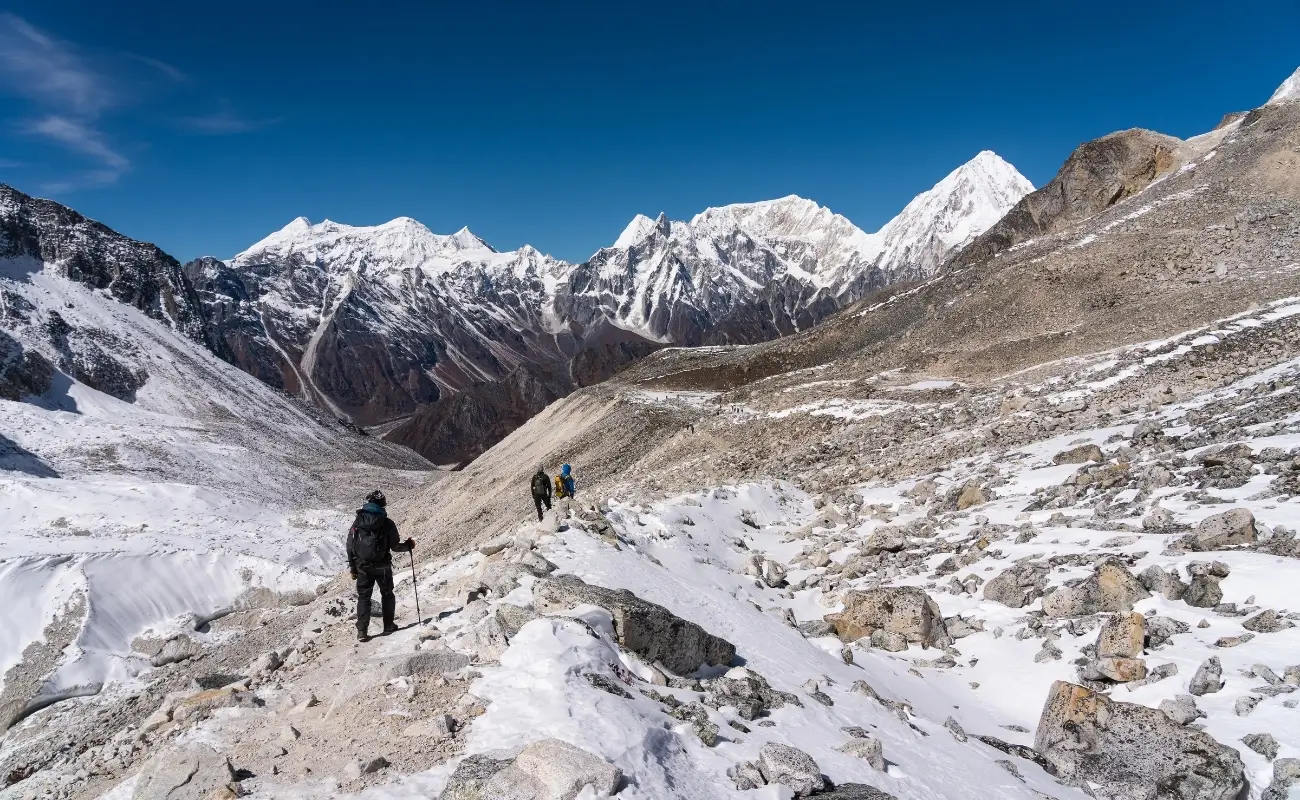 Altitude drives most of Manaslu's difficulty because oxygen availability falls steadily above 3,000 meters, slowing pace, straining breathing, and raising the risk of acute mountain sickness (AMS) if ascent happens too fast. Every other challenge on this trek, distance, terrain, weather, becomes harder when the body is simultaneously adapting to thin air.
How Quickly Does the Manaslu Circuit Trek Gain Elevation?
The itinerary gains elevation gradually for the first four days, then accelerates from Namrung (2,630 m) onward, adding roughly 500 meters daily through Lho, Shyala, and Samagaon. This acceleration is deliberate: below 2,500 meters, the body tolerates faster ascent; above that line, pacing controls safety.
Medical guidance on high-altitude trekking, including the Wilderness Medical Society's 2024 altitude-illness guidelines, recommends limiting sleeping-altitude gain to no more than 500 meters per night above 3,000 meters, with an extra acclimatization night for every 1,000 meters of net gain. The standard Manaslu itinerary follows this pattern closely, which is why abbreviated 10 or 11-day versions concern experienced guides, they often skip or shorten the Samagaon acclimatization stop that this pacing depends on.
What Are the Main Altitude Challenges on the Manaslu Circuit Trek?
The three main altitude challenges are acute mountain sickness (headache, nausea, dizziness, and fatigue), disrupted sleep above 3,500 meters, and reduced stamina on ascents such as the Larkya La summit push. Atmospheric oxygen availability drops from 100% at sea level to approximately 67% at Samagaon and 53% at Larkya La. A 2020 Grande Medical Journal field study of trekkers in Nepal measured this effect directly: unacclimatized travelers at 3,300–3,360 meters in Nepal saw blood-oxygen saturation fall to 87–91%, down from 97–99.7% at lower elevations.
Mild AMS symptoms appear in a meaningful share of trekkers crossing 3,500 meters without adequate acclimatization; the Himalayan Rescue Association's Nepal field guidance recommends 3–4 liters of fluids daily and avoiding alcohol or sedatives at altitude to reduce this risk. Symptoms typically resolve with rest, hydration, and a pause in ascent; they become dangerous only when trekkers push through them and continue climbing. What most people overlook is that fitness alone does not guarantee immunity from AMS. While excellent cardiovascular conditioning reduces overall exertion, a known trigger for mountain sickness, susceptibility ultimately relies heavily on individual physiology and proper pacing.
According to a U.S. Agency for Healthcare Research and Quality (AHRQ) review, roughly 25% of people who ascend above 2,500 meters experience at least mild AMS symptoms, with about 1.5% requiring medical intervention for more severe cases.
How Can Trekkers Acclimatize Safely on the Manaslu Circuit?
Safe acclimatization on the Manaslu Circuit follows the "climb high, sleep low" method: hike to a higher elevation during the day, then descend to sleep at a lower altitude. The built-in acclimatization day at Samagaon supports side trips to Manaslu Base Camp (4,800 m) or Birendra Lake before returning to sleep at 3,530 meters.
Practical acclimatization steps include:
-
Drink 3 to 4 liters of water daily above 3,000 meters
-
Ascend gradually and avoid skipping scheduled rest days
-
Report early AMS symptoms to your guide immediately
-
Avoid alcohol and sleeping pills above 3,500 meters
-
Carry and understand the use of Diamox (acetazolamide) after a doctor's approval
-
Descend immediately if symptoms worsen rather than waiting overnight
We build every Himalaya Trekking Nepal itinerary around this exact sequence because acclimatization days are not buffer time, they are the mechanism that makes the pass crossing survivable.
How Does Altitude Change the Difficulty of the Larkya La Crossing?
Altitude transforms the Larkya La crossing from a long hiking day into an endurance test, because trekkers ascend from 4,460 meters to 5,106 meters and then descend to 3,720 meters within a single 8 to 10-hour push, all in an environment where atmospheric oxygen availability drops to nearly 50% of sea-level values. This single day accounts for a disproportionate share of the trek's total difficulty.
Cold pre-dawn starts, thin air, and an unforgiving descent combine here. Trekkers who managed earlier stages comfortably sometimes still find Larkya La day the hardest of their trekking life, purely because sustained effort at this altitude taxes the cardiovascular system differently than lower-elevation hiking.
How Physically Fit Do You Need to Be for the Manaslu Circuit?
Manaslu Circuit trekkers need above-average cardiovascular fitness capable of sustaining 5 to 8 hours of walking on consecutive days, plus leg strength for steep ascents and descents on uneven terrain. You do not need mountaineering skills or technical climbing experience, but general endurance sports experience shortens the adjustment period significantly.
What Fitness Level Is Recommended for the Manaslu Circuit Trek?
A fitness level equivalent to comfortably hiking 15–18 kilometers with a daypack over hilly terrain, on consecutive days, represents the recommended baseline for the Manaslu Circuit. Runners, regular hikers, and anyone with a consistent cardio routine typically meet this bar within a standard 8 to 12-week preparation window.
This baseline matters more than raw strength. Manaslu rewards aerobic endurance, the capacity to keep moving steadily for hours, over short bursts of power. Trekkers who train exclusively with weightlifting and skip cardio routinely struggle more on Manaslu's long uphill stretches than trekkers who run or cycle regularly but skip the gym entirely.
Can Beginners Complete the Manaslu Circuit Trek?
Beginners can complete the Manaslu Circuit Trek with structured training and a guided itinerary, though it is not the easiest first high-altitude trek in Nepal. First-time trekkers who choose Manaslu should commit to a longer training period, 12 to 16 weeks, and select a 16 to 18-day itinerary that maximizes acclimatization time.
Common mistakes we see among first-timers include underestimating the lower-valley distances, arriving with only gym fitness and no outdoor hiking practice, and choosing the shortest available itinerary to save money. Beginners who avoid these three mistakes and trek with an experienced guide generally finish the circuit without major difficulty, even without prior Himalayan experience.
How Can You Train for the Manaslu Circuit Trek?
Effective Manaslu training combines cardiovascular conditioning, weighted hiking practice, and leg-strength work over an 8 to 12-week period before departure. The training plan should mirror the trek's actual demands: long duration, moderate intensity, and repeated days rather than single intense sessions.
A practical training structure includes:
-
Build a weekly hiking base of 3 to 4 sessions, increasing distance progressively
-
Practice back-to-back hiking days at least twice before departure
-
Train with a loaded daypack of 5 to 8 kilograms to simulate trek conditions
-
Add stair climbing or hill repeats twice weekly for ascent-specific strength
-
Include one long training day monthly of 4 to 6 hours continuous walking
-
Strengthen knees and ankles with squats, lunges, and balance work for descents
Trekkers who reach the trailhead with this level of preparation consistently report an easier adjustment through the first four days, when the body is still calibrating to daily walking loads on top of altitude change.
How Do Age and Previous Trekking Experience Affect Difficulty?
Age alone does not determine Manaslu Circuit difficulty; fitness level, prior high-altitude exposure, and pacing discipline matter more than the number on a birth certificate. Trekkers in their 60s and 70s complete the circuit regularly, while some fit trekkers in their 20s struggle when they ignore acclimatization guidance.
Previous trekking experience helps in a specific way: it teaches pacing instinct. Trekkers who have completed Everest Base Camp or the Annapurna Circuit already know how their body responds to altitude, which removes a layer of uncertainty on Manaslu. First-time high-altitude trekkers of any age should build in extra acclimatization buffer and consider a slightly longer itinerary to compensate for that missing experience.
What Are the Trail and Weather Challenges on the Manaslu Circuit?
Beyond altitude and fitness, the Manaslu Circuit presents narrow cliffside trails, suspension bridges, landslide-prone sections in the Budhi Gandaki gorge, and unpredictable mountain weather that can close Larkya La with little warning. These physical and environmental factors compound the altitude-driven difficulty already discussed above.
How Difficult Are the Trails and Steep Sections?
Trail difficulty ranges from easy riverside walking in the lower gorge to exposed, narrow paths with steep drop-offs near Deng, Bihi, and the approach to Namrung. Suspension bridges cross the Budhi Gandaki River repeatedly, and several sections use carved steps or cantilevered wooden walkways bolted directly into cliff faces.
None of these sections require technical climbing skill, but they demand steady footing and comfort with exposure. Trekking poles reduce strain significantly on the steep ascents between Jagat and Namrung, where the trail gains and loses elevation repeatedly within a single day rather than climbing steadily.
How Does Weather Affect Manaslu Circuit Trek Difficulty?
Weather adds unpredictability to Manaslu Circuit difficulty, with spring (March–May) and autumn (September–November) offering the most stable conditions, while winter brings heavy snow at the pass and monsoon season brings landslide risk in the lower gorge. Even in the recommended seasons, temperatures at Larkya La can swing sharply within hours.
Spring and autumn remain the two windows we recommend to clients, yet neither guarantees stability. For a full month-by-month breakdown, see our guide on the best time for the Manaslu Circuit trek. Early spring can still leave deep snow at the pass, and late autumn, particularly the final week of November, brings sudden cold snaps and snowfall that has closed Larkya La for multiple consecutive days in past seasons. Winter (December–February) technically remains passable for well-equipped, experienced groups, but snow depth and cold routinely push it beyond what most standard trekkers should attempt. Monsoon season (June–August) adds leech-heavy trails, obscured mountain views, and a meaningfully higher landslide risk along the Budhi Gandaki gorge.
How Difficult Is the Larkya La Pass Crossing?
The Larkya La Pass crossing ranks as the single hardest day of the Manaslu Circuit, requiring 8 to 10 hours of continuous walking from Dharamsala (4,460 m) to Bimthang (3,720 m) across snow-covered, rocky terrain that peaks above 5,000 meters before a steep, grueling descent. Groups start before sunrise, both to cross before afternoon winds pick up and to descend to Bimthang's safer elevation before dark.
Trekkers should expect temperatures well below freezing at the pre-dawn start, a steady but manageable ascent to the summit, and then a long, knee-jarring descent that tests different muscles than the climb. Snow conditions vary year to year; some seasons require microspikes or crampons for safe footing near the summit, which is why checking current trail conditions with a licensed guide matters more here than on any other stage of the route.
What Challenges Can Trekkers Face in Remote Mountain Areas?
Remote sections of the Manaslu Circuit present limited teahouse capacity, cash-only payments, no reliable mobile signal above Samagaon, and slower emergency response times compared to more developed trekking regions like the Everest or Annapurna corridors. These logistical realities shape difficulty as much as the physical terrain does. Trekkers planning any route through the Manaslu region should budget extra time and cash for these remote stretches.
Facilities at Dharamsala, the final stop before Larkya La, are especially basic: shared rooms, limited menu options, and teahouses that operate only during trekking season. Trekkers should carry sufficient Nepalese rupees for the entire trek, since no ATMs exist past the early lower-valley villages, and should not expect consistent internet access once the route leaves Samagaon behind.
How Does the Manaslu Circuit Compare With Other Nepal Treks?
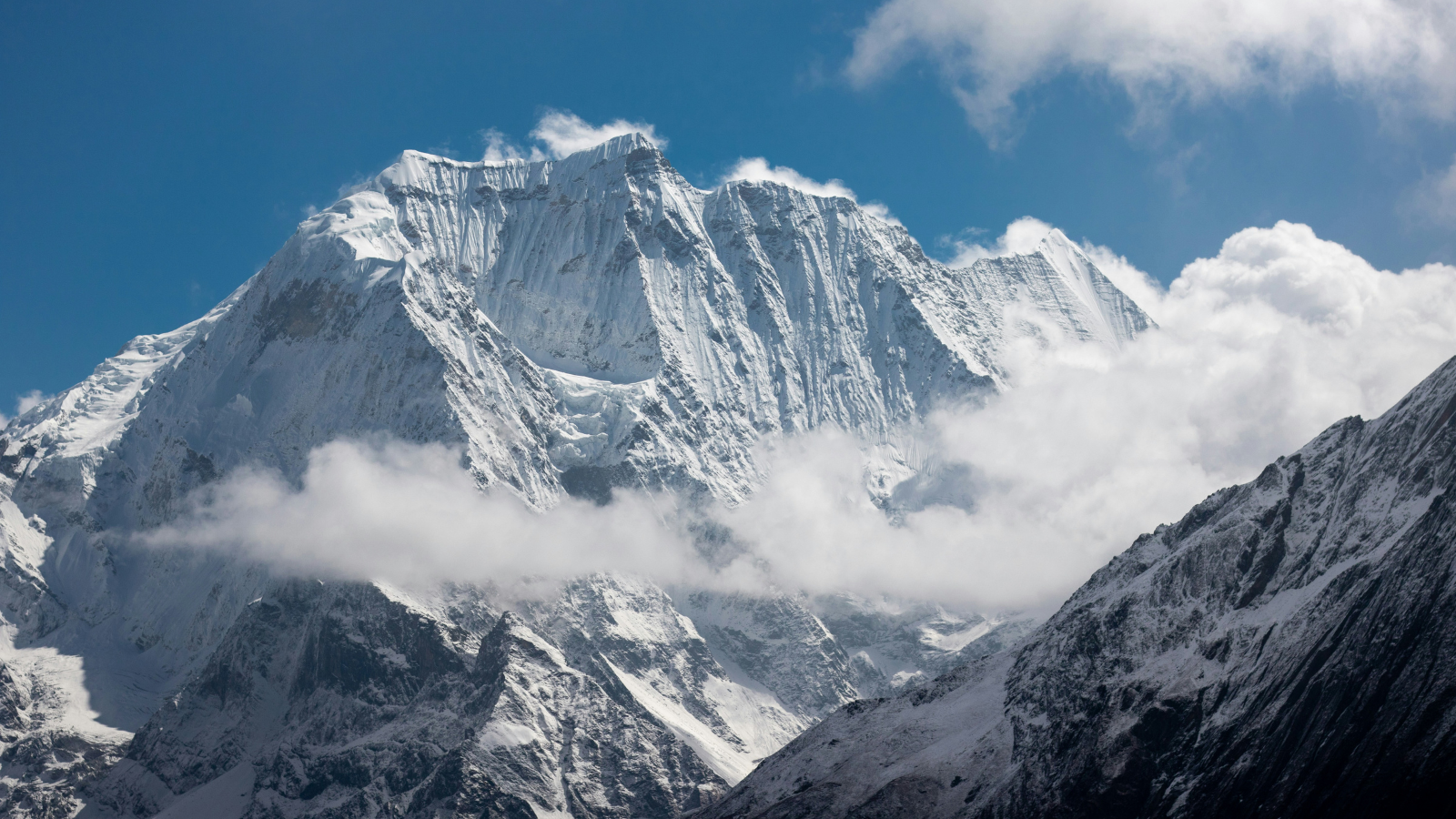 The Manaslu Circuit generally ranks as more physically demanding than the Annapurna Circuit and the Everest Base Camp trek, despite the fact that both Thorong La (5,416 m) and Kala Patthar (5,545 m) reach higher altitudes than Larkya La. Difficulty on Manaslu comes less from raw elevation and more from rougher trail conditions, longer remote stretches, and thinner support infrastructure.
Is Manaslu Circuit Harder Than the Annapurna Circuit?
Manaslu Circuit is generally considered harder than the Annapurna Circuit for most trekkers, primarily because Manaslu's teahouse infrastructure is more basic and its lower-gorge trail is rougher, even though the Annapurna Circuit trek's Thorong La Pass (5,416 m) sits 310 meters higher than Larkya La. Annapurna also benefits from a paved and well-developed road network spanning large portions of the circuit, whereas Manaslu's upper trail remains entirely roadless beyond the lower valley roadheads.
Both treks demand a restricted-area mindset around remoteness, but Annapurna's decades-longer tourism history means better-stocked teahouses, wider food variety, and more established trail markings. Manaslu's status as a restricted area, requiring a licensed guide and government permits, keeps trekker numbers lower, which preserves an authentic, quieter experience at the cost of fewer comfort options along the way.
Is Manaslu Circuit Harder Than Everest Base Camp?
Manaslu Circuit is generally considered harder than the Everest Base Camp trek day-to-day, despite Everest Base Camp's higher maximum elevation at Kala Patthar (5,545 m) versus Larkya La (5,106 m), because EBC's trail is better maintained and its teahouse network is significantly more developed. Everest Base Camp's difficulty concentrates in sustained high-altitude days around Namche Bazaar and Dingboche; Manaslu's difficulty concentrates in one uniquely demanding pass-crossing day combined with consistently rougher terrain throughout.
Logistics differ meaningfully too. EBC trekkers reach the trailhead via a short flight to Lukla, while Manaslu trekkers drive 8 to 10 hours by jeep from Kathmandu, a rougher but weather-independent start with no risk of the flight delays that regularly disrupt Everest region itineraries. For a closer look at that route, see our breakdown of Everest Base Camp trek difficulty.
Is the Manaslu Circuit Suitable for First-Time High-Altitude Trekkers?
The Manaslu Circuit suits well-prepared first-time high-altitude trekkers, but it is not the gentlest introduction to Himalayan trekking compared with shorter, better-supported routes like Annapurna Base Camp. First-timers who choose Manaslu should extend their itinerary to 16–18 days and train more conservatively than a returning trekker would need to.
Trekkers seeking the lowest-risk entry into high-altitude trekking often start with Annapurna Base Camp or a shorter Everest region trek before attempting Manaslu. Trekkers confident in their fitness and comfortable with basic facilities can absolutely make Manaslu their first major Himalayan trek, provided they pair it with a longer acclimatization schedule and a licensed guide.
How Can You Make the Manaslu Circuit Trek More Manageable?
Trekkers make the Manaslu Circuit more manageable by extending the itinerary for extra acclimatization, packing altitude-appropriate gear, and trekking with a licensed guide who can adjust pacing in real time. None of these steps change the trek's fundamental altitude or terrain, but each one directly reduces the risk of the trek becoming unmanageable.
What Acclimatization Strategy Helps Reduce Trekking Difficulty?
A 16 to 18-day itinerary with two acclimatization days, one at Samagaon and one flexible buffer day near Samdo, reduces trekking difficulty more than any single piece of gear or fitness gain. Extra time built into the schedule allows the body to adapt naturally, rather than forcing adaptation through willpower on the hardest days.
Time, not toughness, solves most altitude problems. A trekker who adds two days to their itinerary consistently reports an easier Larkya La crossing than a trekker with identical fitness who compresses the same route into fewer days.
What Gear Can Make the Manaslu Circuit More Comfortable?
Essential comfort gear includes a sleeping bag rated to -15°C or lower, layered insulation for temperature swings between 25°C in the lower gorge and -10°C at Dharamsala, trekking poles, and a personal first-aid kit with Diamox approved by a doctor. Teahouses above Samagaon do not provide heated rooms, so personal insulation becomes the main defense against cold nights. Our trekking packing list guidelines cover exactly what to bring for these temperature swings.
A practical gear checklist for the upper trail includes:
-
Four-season sleeping bag rated for sub-zero temperatures
-
Insulated down jacket and moisture-wicking base layers
-
Trekking poles for steep ascents and the Larkya La descent
-
Microspikes or lightweight crampons for early or late-season snow
-
Water purification tablets or a filter, since bottled water becomes scarce and costly above Samagaon
-
Headlamp with spare batteries for the pre-dawn pass crossing
How Can a Guided Trek Help With the Manaslu Circuit?
A licensed guide improves Manaslu Circuit safety and comfort by managing pacing, monitoring AMS symptoms, handling permit checkpoints, and adjusting the itinerary in response to real-time weather or trail conditions. Nepal's restricted-area regulations already require a licensed guide for Manaslu, which removes the independent-trekking option available on more open routes.
Beyond the legal requirement, a guide's value shows up most on decision-heavy days: whether to push for the pass in marginal weather, whether a headache warrants a rest day, and how to read early AMS symptoms in a client who may downplay them. This judgment, built from repeated seasons on the same route, is difficult to replace with an app or a guidebook.
How Can Himalaya Trekking Nepal Help You Prepare for the Manaslu Circuit?
Himalaya Trekking Nepal supports trekkers through every stage of Manaslu preparation: securing the Restricted Area Permit, MCAP, and ACAP through registered channels, assigning a government-licensed guide, and building an itinerary with acclimatization days matched to each trekker's fitness and experience level. As a Kathmandu-based, government-registered trekking agency, we handle the logistics that individual trekkers cannot arrange alone on a restricted route.
Permit processing sits at the center of this support, since the Manaslu permit cost and Restricted Area Permit application can only be arranged through a registered agency, not directly by trekkers. We also brief every group on the realistic training timeline, seasonal weather patterns, and gear list specific to the season they've chosen, so preparation starts with accurate expectations rather than generic advice pulled from unrelated treks.
Can Himalaya Trekking Nepal Help You Plan a Suitable Manaslu Circuit Trek?
Himalaya Trekking Nepal builds Manaslu Circuit itineraries around each trekker's fitness level, available time, and prior altitude experience, rather than offering a single fixed schedule. A first-time high-altitude trekker and a returning Everest Base Camp veteran need different pacing, and our itinerary planning reflects that difference from the first consultation.
If you're weighing whether Manaslu fits your current fitness, or comparing it against the Annapurna Circuit or Everest Base Camp for your next Himalayan trip, our team can walk through your training timeline, preferred season, and experience level to recommend a realistic itinerary, no pressure, just an honest read on what will suit you best.
What Are the Key Takeaways About Manaslu Circuit Trek Difficulty?
The Manaslu Circuit Trek carries a moderate-to-strenuous difficulty rating shaped by five main factors: high altitude up to 5,106 meters at Larkya La Pass, 14 to 18 days of trekking, roughly 4,000 to 4,200 meters of cumulative elevation gain, basic teahouse infrastructure above Samagaon, and variable mountain weather. None of these factors makes the trek inaccessible to a well-prepared trekker.
The trek rewards preparation more than raw athleticism. Trekkers who train for 8 to 12 weeks, choose a 16 to 18-day itinerary with built-in acclimatization days, pack for genuine cold, and trek with a licensed guide consistently report a manageable, deeply rewarding experience, even trekkers attempting their first high-altitude crossing. The The Manaslu Circuit Trek difficulty question ultimately has less to do with whether you're fit enough today, and more to do with whether your itinerary gives your body the time it needs to adapt. Explore our Manaslu Circuit Trek itinerary to see how we build that acclimatization time in from day one.
More About Author
Khilak Budhathoki
Travel Director
Khilak Budhathoki is the co-founder and lead trekking guide at Himalaya Trekking Nepal, a locally owned and operated adventure company based in Kathmandu. Born and raised in the foothills of Nepal, Khilak developed a deep love for the mountains from an early age. With over a deca...
USD$1290 pp
Our Recommendation
Related Blogs